
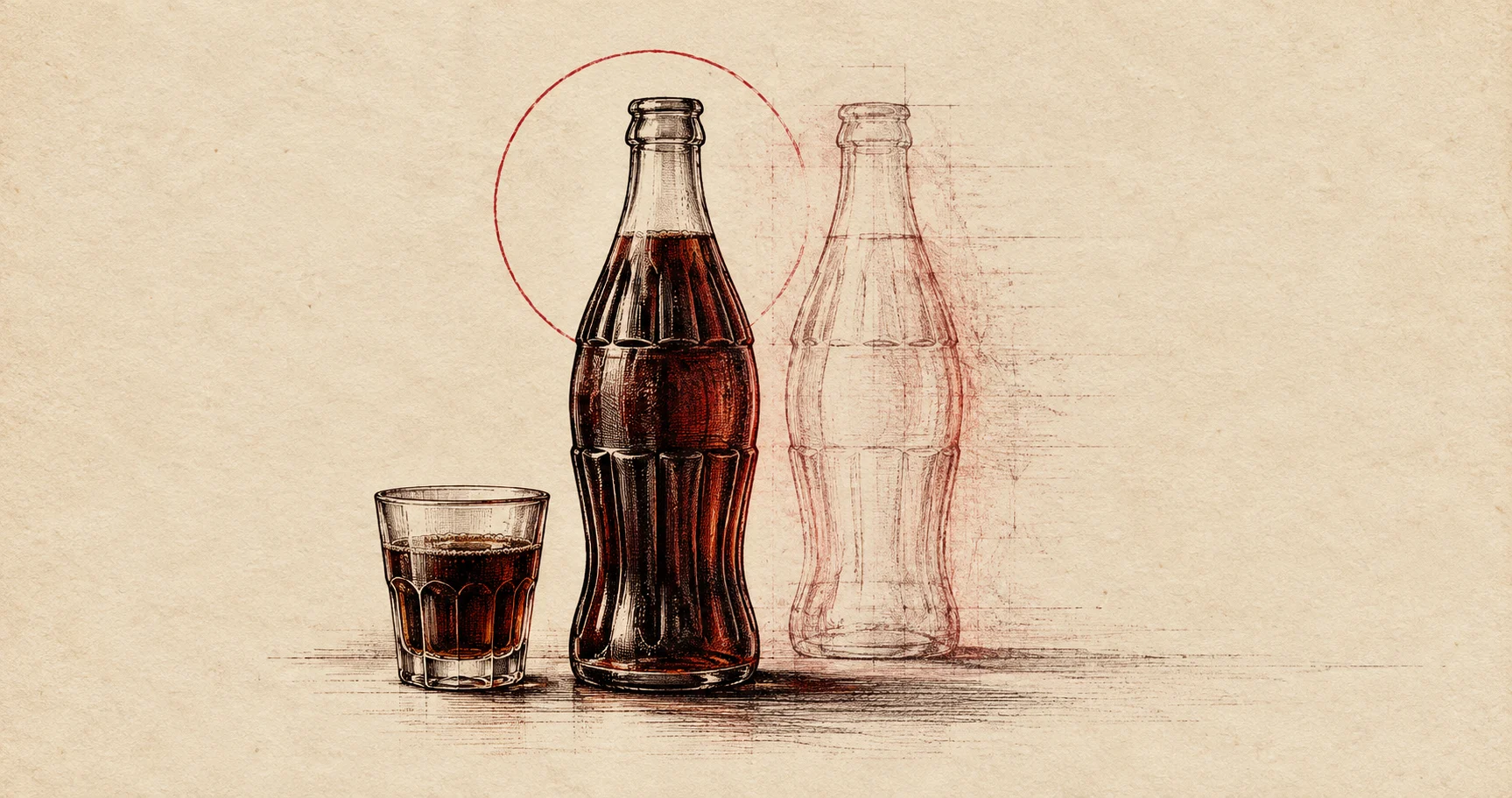
A tasting glass is very good at holding a small amount of cola.
It is less good at holding a childhood, a familiar order, or the sense that something belongs to you.
In 1985, Coca-Cola introduced a new formula after consumer tests involving nearly 200,000 people. The company says the new formula was preferred in those tests. It also says the research did not capture consumers’ attachment to the original.
The original formula returned as Coca-Cola classic on July 11, 79 days after the change. New Coke remained available alongside it.
The familiar shorthand is that Coca-Cola failed to listen. The more interesting account is that it listened to an answer that did not contain the whole decision.
What did the test allow someone to choose?
Every research method creates a frame.
You can ask which headline is clearer, which package someone prefers, or which version of a service sounds more attractive. Those answers can be useful. They depend on what the person knows, what alternatives they can see, and what the exercise asks them to imagine losing.
An isolated preference is one piece of a decision. Before treating it as instruction, examine the frame that produced it.
For a service business, a buyer may prefer a simpler package in a survey while still needing the reassurance of experienced people handling exceptions. The question is how to preserve that reassurance while improving the offer.
Find out what customers rely on
Ask about an actual decision, in sequence.
What was happening when the customer began looking? What alternatives did they consider? Who else had to agree? What made the choice feel safe enough to make? What would have caused them to walk away?
In a substantial organization, the purchaser, user, and approving executive may value different things. A marketing director could love the creative work while an operations leader worries about rollout. Both are evaluating your company.
Listen for the qualities that make those decisions possible. They may be less visible than the feature your team is preparing to improve.
Treat familiarity as evidence to examine
Familiarity can make a useful offer easier to recognize. It can also keep an outdated arrangement in place.
The task is to understand which kind you are dealing with. What does a recognizable name, person, process, or detail mean to the customer? Does it signal reliability? Does it help them explain the choice internally? Has it become an obstacle to understanding the current business?
Do that work before assuming every familiar element is sacred or every old element is disposable.
Test the change in its real context
If you are changing an offer, show how it will be bought and delivered. If you are changing an identity, show it where customers use it. If you are changing a relationship, explain who will remain responsible and how the handover will work.
Include existing customers and the people you hope to serve next. Look for differences between them. A company can protect earned trust while making a more useful introduction to a new audience, but the decision deserves evidence.
Before deciding the new thing is better, make sure you know what people believe they are being asked to give up.
Sources and context
Historical details are grounded in the sources below. Business interpretations are RUINE’s editorial analysis. The featured image is an original conceptual illustration, not a historical photograph or measured drawing.
Continue reading at The Desk, or begin with What is a brand brokerage?