
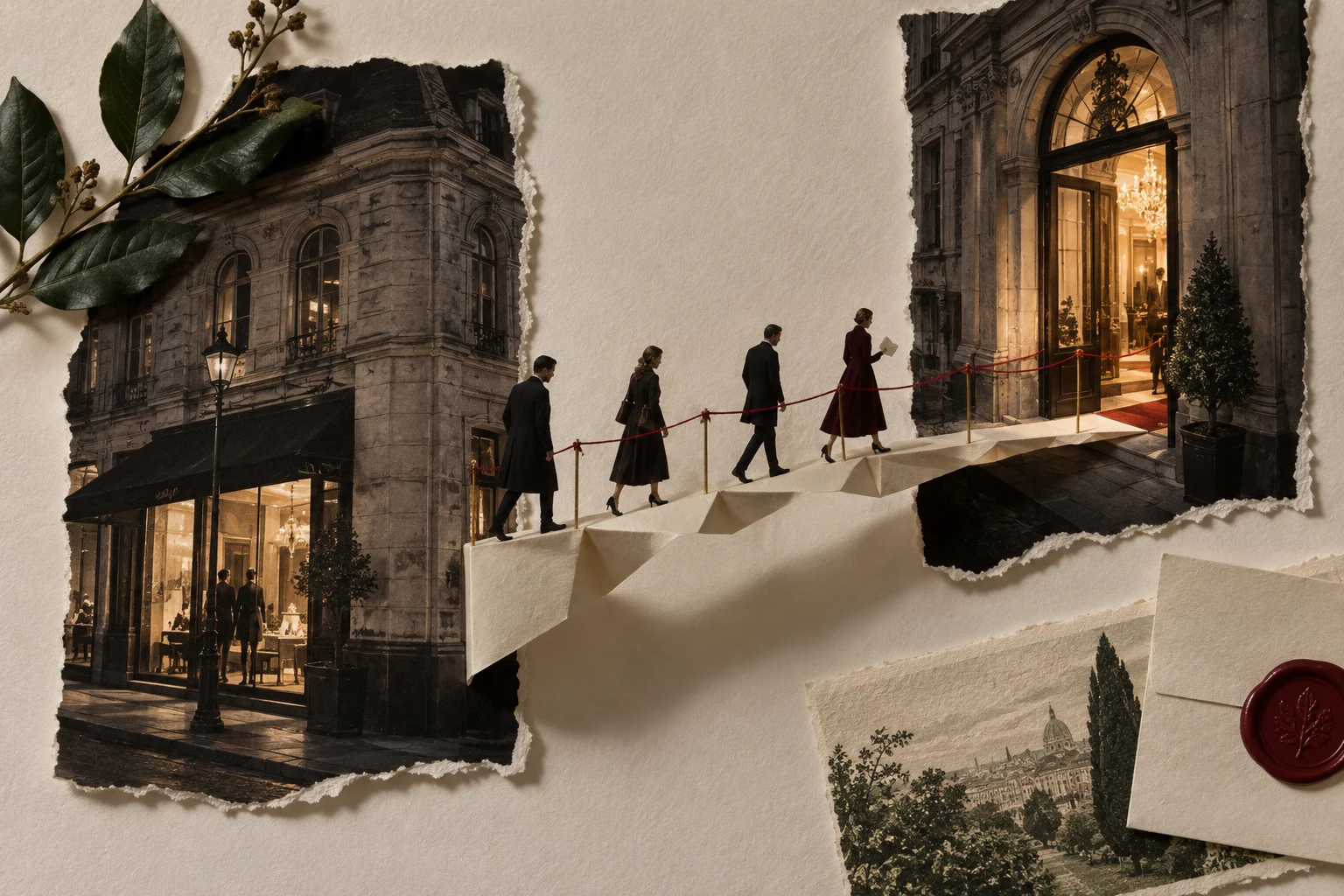
A department store can tell a city that Christmas has arrived.
Or it can put a tree above the street and give the city a reason to look up together.
In 1948, Rich’s placed its first Christmas tree on the Crystal Bridge in downtown Atlanta. The bridge connected the main store to its Store for Homes across Forsyth Street. Lighting the tree became a Thanksgiving-night tradition. The Pink Pig followed in 1959, carrying children above the toy department and, later, on the roof.
Those details survive in Atlanta History Center’s collection because people remember participating. A bridge that moved shoppers between buildings also became part of the city’s holiday calendar.
For a company trying to earn attention, that is a useful distinction to sit with.
What can someone actually enter?
Marketing often begins with what a company wants to say. The experience begins with what a person can do.
A founder-driven business may have a substantial team, a sophisticated offer, and plenty worth saying. Its communications can still lead people into a lobby with no obvious reception desk.
The campaign earns a click. The page offers a broad description. The next step is a form that asks the visitor to diagnose their own needs before anyone has helped them understand the work.
Attention has arrived. The company has not quite prepared for its arrival.
Give the next step a purpose
A useful next step helps someone make progress in a decision they already care about.
It might be seeing a relevant project, comparing two routes, understanding the first stage of an engagement, or meeting a specialist who can answer a bounded question. In a physical business, it might be an event, an appointment, or a place where the product can be experienced properly.
For a complex service, “contact us” can work if the visitor understands what the conversation is for and what will happen after it.
Consider a leadership team evaluating a major change. Which uncertainty should be smaller by the end of its first conversation with you? Design the invitation around that.
The experience needs an owner
Once a business has several departments, the next step can fall between them.
Marketing owns the invitation. Sales owns the reply. Operations owns the capacity. Leadership owns the promise. A customer experiences the entire sequence without knowing where your departmental boundaries lie.
Walk through one real path together. Read the page, submit the inquiry, inspect the reply, and follow the handover. Where does the level of care change? Where does a person have to repeat something the company already knows?
Those are places to improve before adding more traffic.
Build something people have a reason to return to
A recurring editorial series, a useful gathering, or a reliable moment of service can become recognizable through repetition. The repetition only matters when the experience remains worth having.
A company’s invitation becomes stronger when it points to something people can experience and remember.
You do not need a tree above Forsyth Street.
You do need to know what happens when someone looks up.
Sources and context
Historical details are grounded in the sources below. Business interpretations are RUINE’s editorial analysis. The featured image is an original conceptual illustration, not a historical photograph or measured drawing.
Continue reading at The Desk, or begin with What is a brand brokerage?