
Before the food hall, there was Sears. Before Sears, there was an amusement park.
Ponce City Market’s own history traces the site through springs, streetcar arrivals, and the Ponce de Leon amusement park. Sears later bought land for a store and distribution center. After the showrooms closed in 1989, Atlanta bought the building in 1991 and made it City Hall East.
Restoration began in 2011. Shops, the food hall, and BeltLine access opened in 2015.
The use changed. The long brick structure remained part of how people recognized the place.
For a company approaching a new identity, there is a worthwhile question inside that sequence: what gives the next chapter somewhere to belong?
Find the value before proposing the change
A business has several kinds of history.
There is the history leadership can recite. There is the history customers carry in their expectations. There is the history embedded in how people actually do the work.
Those accounts may differ. A founder remembers an original intention. A long-serving account director remembers the promise that won trust. A client remembers the moment someone handled a difficult problem without making it theirs to solve.
Collect those accounts before deciding that the visible identity is the only thing with continuity worth preserving.
Distinguish character from constraint
An old detail can be valuable because it helps people recognize the company. Another can remain simply because nobody has had time to question it.
Perhaps the name carries real trust while the language around it describes an offer you have outgrown. Perhaps a distinctive color still belongs, but the way the identity is applied cannot accommodate several divisions. Perhaps the most important continuity is a standard of care that has never been written down.
Assess each element by the work it does now and the work it must do next. “We have always had it” starts the investigation. It does not finish it.
Preserve what customers would miss
Ask trusted clients what they would be disappointed to lose as the company changes.
Avoid presenting a new design and asking for a vote. Listen for the qualities beneath the answer: access to experienced judgment, a particular kind of responsiveness, confidence that different teams will stay coordinated, or the feeling that someone understands the stakes.
Those qualities need owners and practices. A rebrand can give them a clearer expression. The organization must keep making them true.
For a business with several locations or an executive team, establish how those qualities travel. The founder cannot personally embody every promise in every room.
Give the new chapter a clear use
Preservation does not require keeping the company in a former shape. New clients, services, and organizational responsibilities may require substantial change.
Write down what the new identity must make possible. Then write down what must remain recognizable through that change. Resolve the tension in the work itself: language, architecture of offers, design, experience, and adoption.
A recognizable structure can support a different use when the intervention understands both.
Before you erase a line, find out what it is holding.
Sources and context
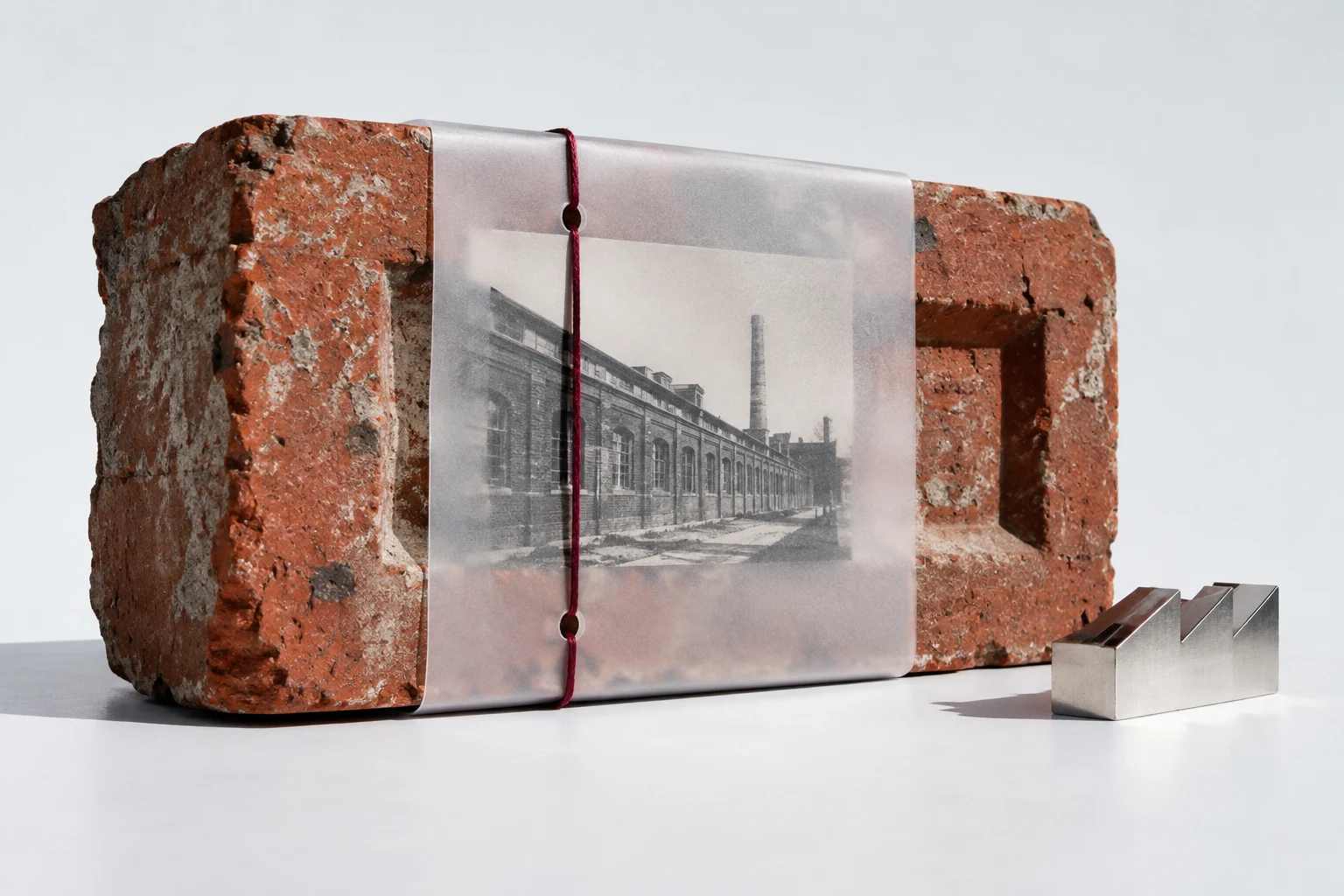
Historical details are grounded in the sources below. Business interpretations are RUINE’s editorial analysis. The featured image is an original conceptual illustration, not a historical photograph or measured drawing.
Continue reading at The Desk, or begin with What is a brand brokerage?