A one-hour session tells you how long you will be there. It tells you very little about why you would go, who you need, or what you are committing to.
For The Pursuit Counseling, we reworked that relationship. Working with founder Adam Glendye, we connected the offer structure, pricing model, brand language, and website experience so that someone arriving with a difficult, often unnamed problem could find a recognizable way forward.
The starting point was a small menu of individual therapy, couples therapy, and EMDR. The work expanded it into a connected system: concentrated intensives, structured programs, experiential work, workshops, and a private executive engagement. Each had a distinct reason to exist, a clearer commitment, and a place inside the larger practice.
The unit of value changed.
When everything is presented as an hour, the visitor is left comparing hours. The questions that matter stay unanswered: Is this right for what I am carrying? How does the work unfold? Who will I have access to? What will I leave with?
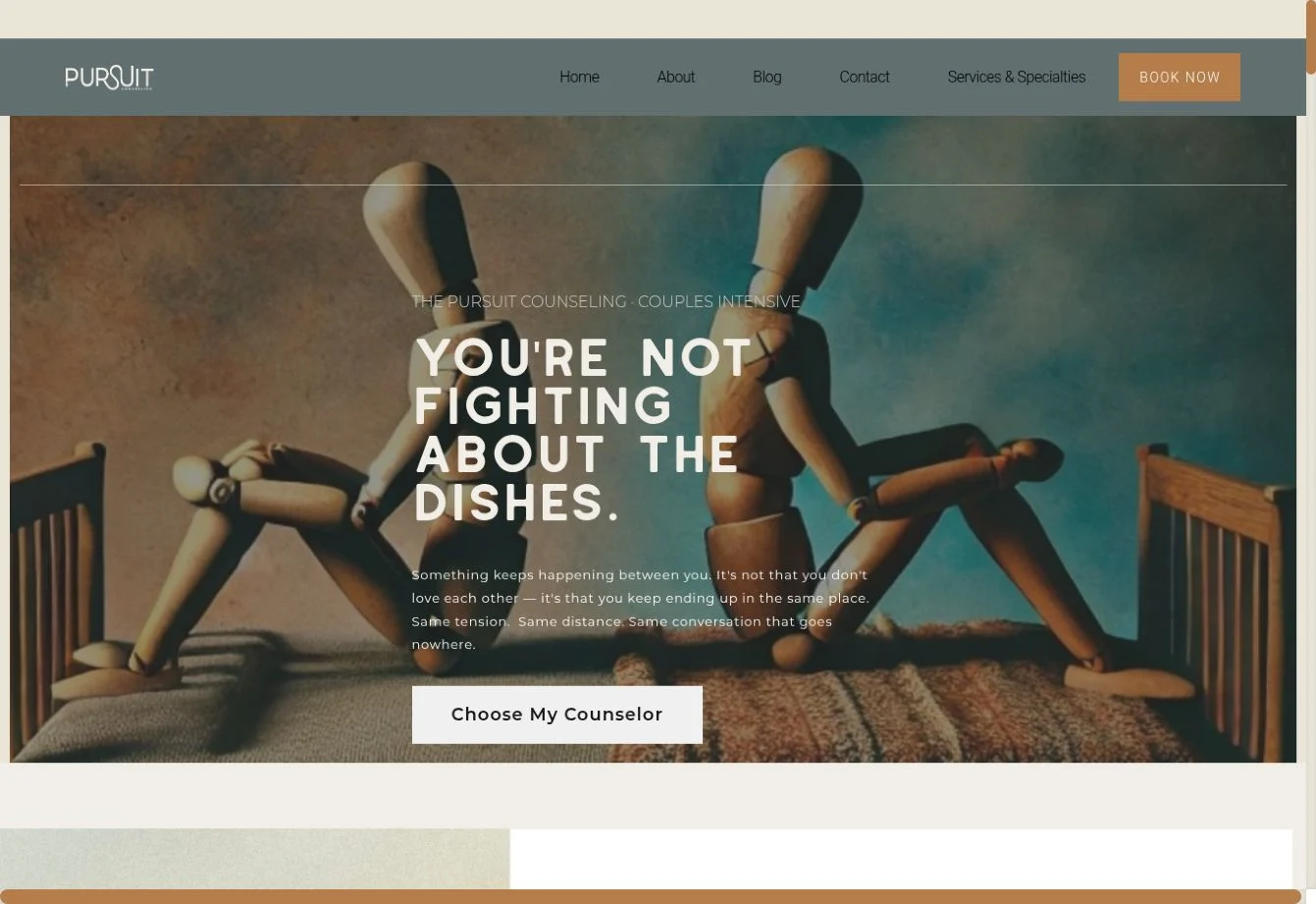
We organized the offers around those questions. Couples Intensive gave relationship work a concentrated shape: three sessions of three hours, guided by the Four P’s, ending with a written plan. Next Chapter created a different entry point for someone facing a transition, a decision, or a life that no longer fit. The work could share a structure without asking two very different people to recognize themselves in the same story.
The clinical model belongs to The Pursuit and Adam. Our work was to make its structure visible and understandable: the offer architecture, positioning, narrative, visual language, page sequence, and paths into the team.
Pricing became part of the experience.
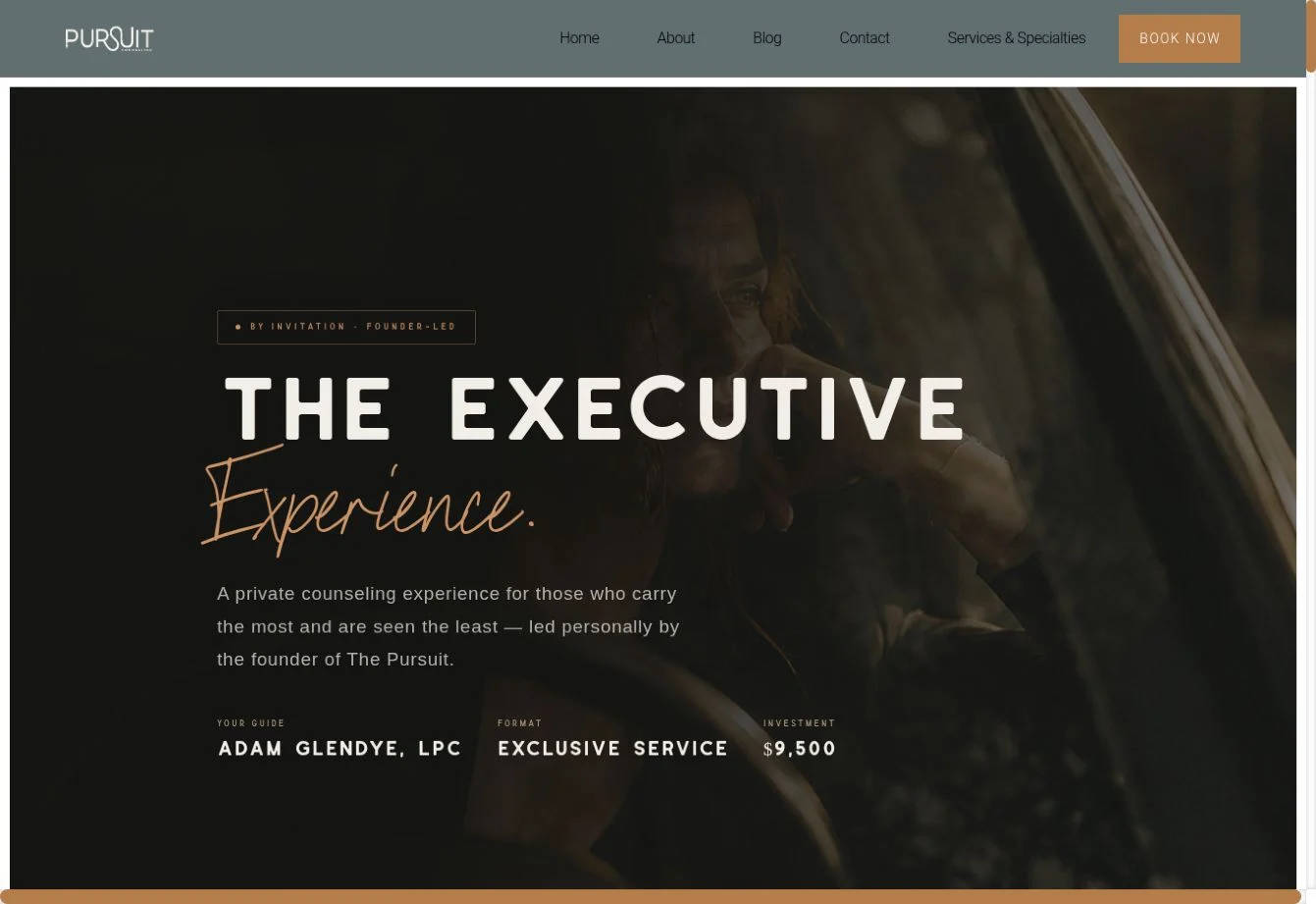
The clearest expression is the Executive Experience. Its published price is $9,500 for a nine-hour, founder-led engagement, billed as one. The offer includes private onboarding, sessions arranged outside the workday, a direct line to Adam between sessions, and a schedule that can run across two to six weeks. Sessions are no longer than ninety minutes.
This is a different access model. The engagement defines who delivers the work, the availability around it, the privacy of the entry, and the continuity between meetings. The price sits beside a specific experience rather than an interchangeable appointment length.
Couples and Next Chapter use another commitment structure. Their public pages explain upfront payment to reserve dedicated time and allow for preparation. A free fifteen-minute fit call gives someone room to understand the format before making that commitment. Ongoing counseling remains a way in, too.
The result is a more legible set of choices: a conversation to find your fit, ongoing support, concentrated work around a specific moment, or a private founder-led engagement. Each asks for a different commitment and explains what that commitment contains.
The website needed to think like the person arriving.
A visitor rarely arrives thinking in the language of a treatment menu. They arrive tired of arguing. They cannot switch off. A chapter has ended. They are keeping things together and wondering how much longer they can.
We built specialty pathways around trauma, anxiety, life transitions, addiction, and depression. These help a person recognize their experience before asking them to choose a method. A separate set of pages explains the ways the practice can work: Intensives, Programs, Experiential, and Workshops.
That distinction matters. The reason someone seeks support and the format that may suit them are related questions. They should connect without being collapsed into one long list.
The page sequence follows that decision: recognition, an explanation of the work, its structure, the people who deliver it, practical questions, and an appropriate next step. Related services and editorial material give someone room to explore. A guide creates a smaller step for someone who is interested but not ready to book.
Different stories. One practice.
The visual work had to make the offers feel distinct while keeping them recognizably part of The Pursuit. Shared typography, parchment, charcoal, warm earth tones, and a language of terrain and movement hold the system together. The imagery and narrative change with the person entering.
For couples, the opening scene turns an ordinary domestic argument into recognition of a repeating pattern. Next Chapter uses the image of a log held against a rail: the frustration of waiting for an outside force to make movement possible. The Executive Experience finds a quieter moment—the person sitting in the car before walking into the next place that needs something from them.
Those images give the copy somewhere to land. The reader can recognize a situation before being asked to explain themselves. Running, pacing, and aid stations then make the intensive structure understandable, connecting the Four P’s—Pattern, Presence, Purpose, Plan—to Adam’s own language of purposeful movement.
The next click needed to carry the decision forward.
Reaching a booking page should not mean starting over. Counselor cards connect the person’s story to a named clinician, an area of focus, and a relevant booking route. On intensive pages, someone can schedule a conversation or move toward the intensive itself.
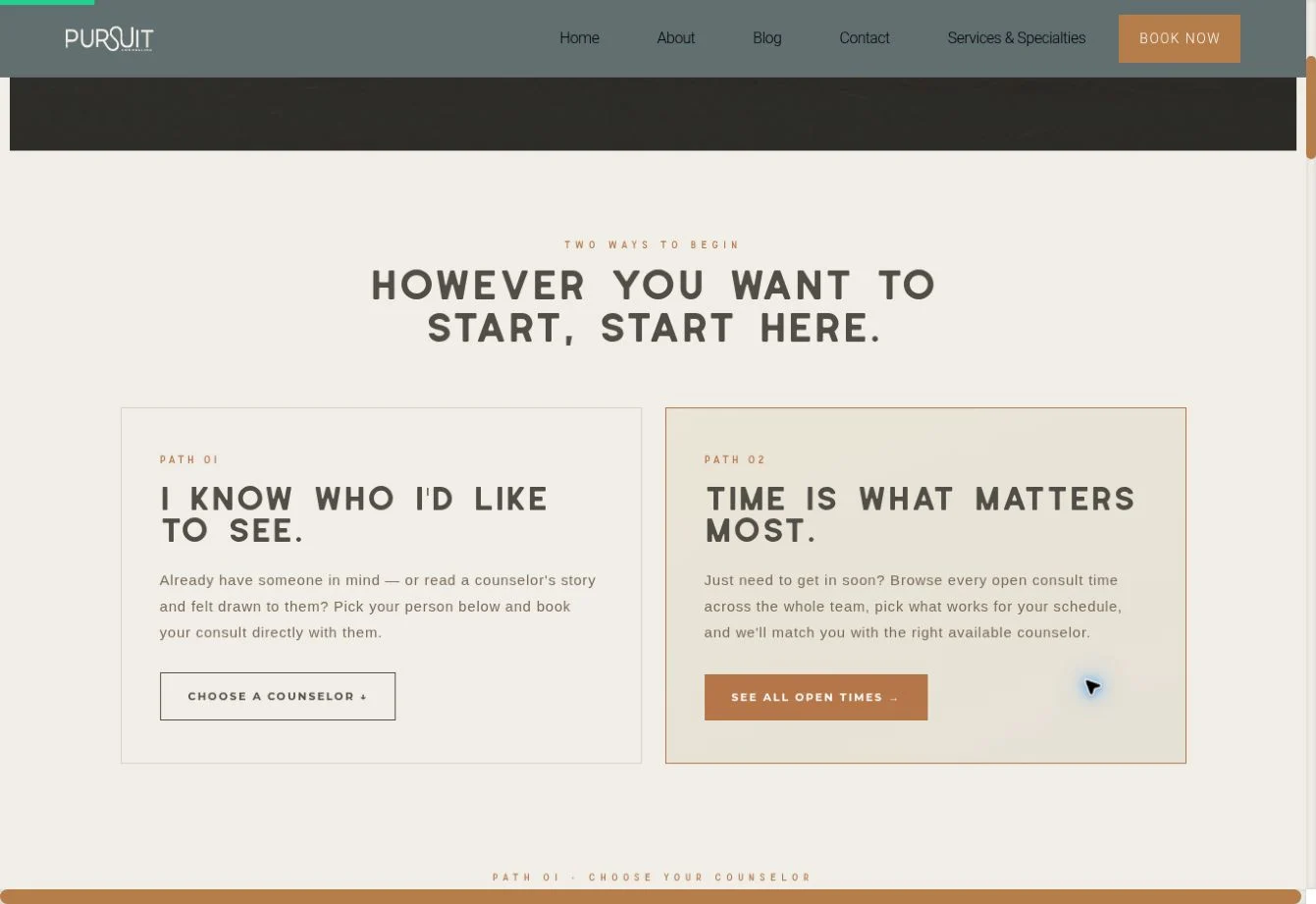
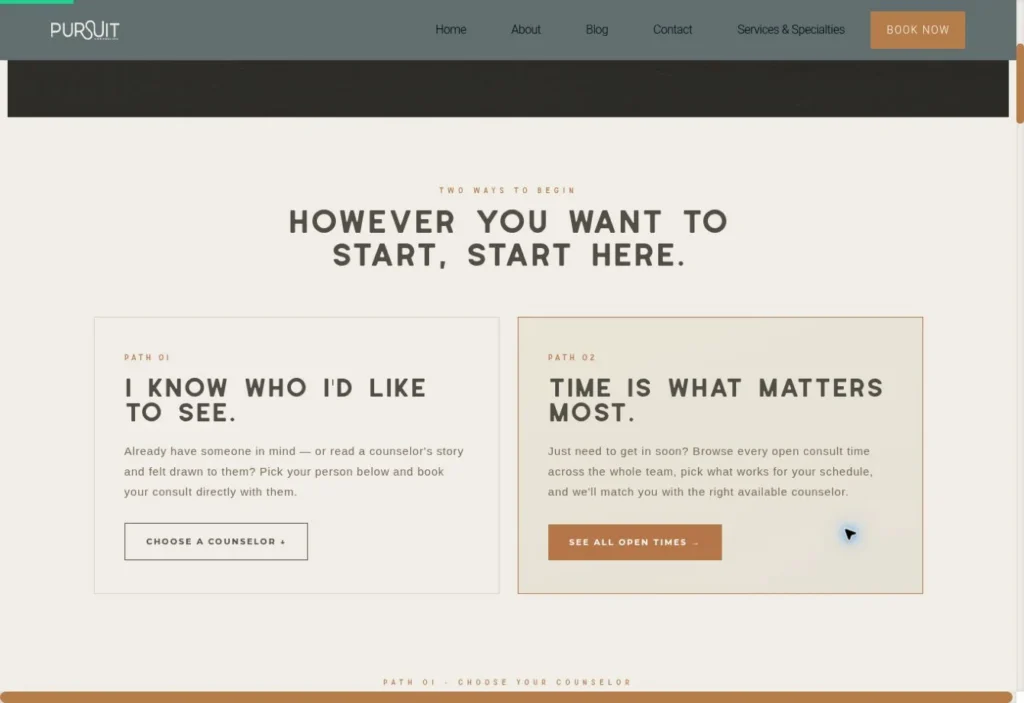
Start My Pursuit gives the broader practice two clear entrances. People who already feel drawn to a counselor can choose that person. People who need an available time can browse the team calendar. Both begin with a complimentary fifteen-minute consult. The page explains what follows and addresses the hesitation that a calendar alone cannot resolve.
The Executive Experience takes its own route: a private request, a conversation with Adam, a fit decision, and onboarding. The path supports the level of access the offer describes.
The experience continues beyond the page.
Guides, workbook design, written plans, and the first-contact journey were part of the same thinking. They give the offering a shape before someone arrives and something to return to afterward. The original build documentation connects page design to asset delivery, counselor routing, and follow-up. Those handoffs belong to the experience as much as the hero image does.
Programs such as EMDR and the ADHD program give specific methods a clearer home. Experiential work and workshops expand the ways someone can engage without forcing every form of support into a weekly appointment. The architecture can grow as the practice grows.
What changed.
The delivered work changed what a visitor could understand and choose. A handful of appointment types became a connected set of experiences, with different formats, commitments, access arrangements, and next steps. The website made those differences visible and connected them back to the people delivering the care.
That is the documented result of this project: a new offer and website architecture, with live intensive pathways, a published executive package, and guided routes into the team. Revenue, booking lift, and clinical outcomes require their own evidence; they are not inferred from the design.
A brand becomes tangible when the way you engage with it matches what it promises. Here, the strategy lives in the commitment someone makes, the person they meet, the time reserved for them, and the way they find their next step.
From the project file.
Explore the live Services & Specialties system, Couples Intensive, Next Chapter Intensive, Executive Experience, and Start My Pursuit. The sheets below are captures of the live website.