
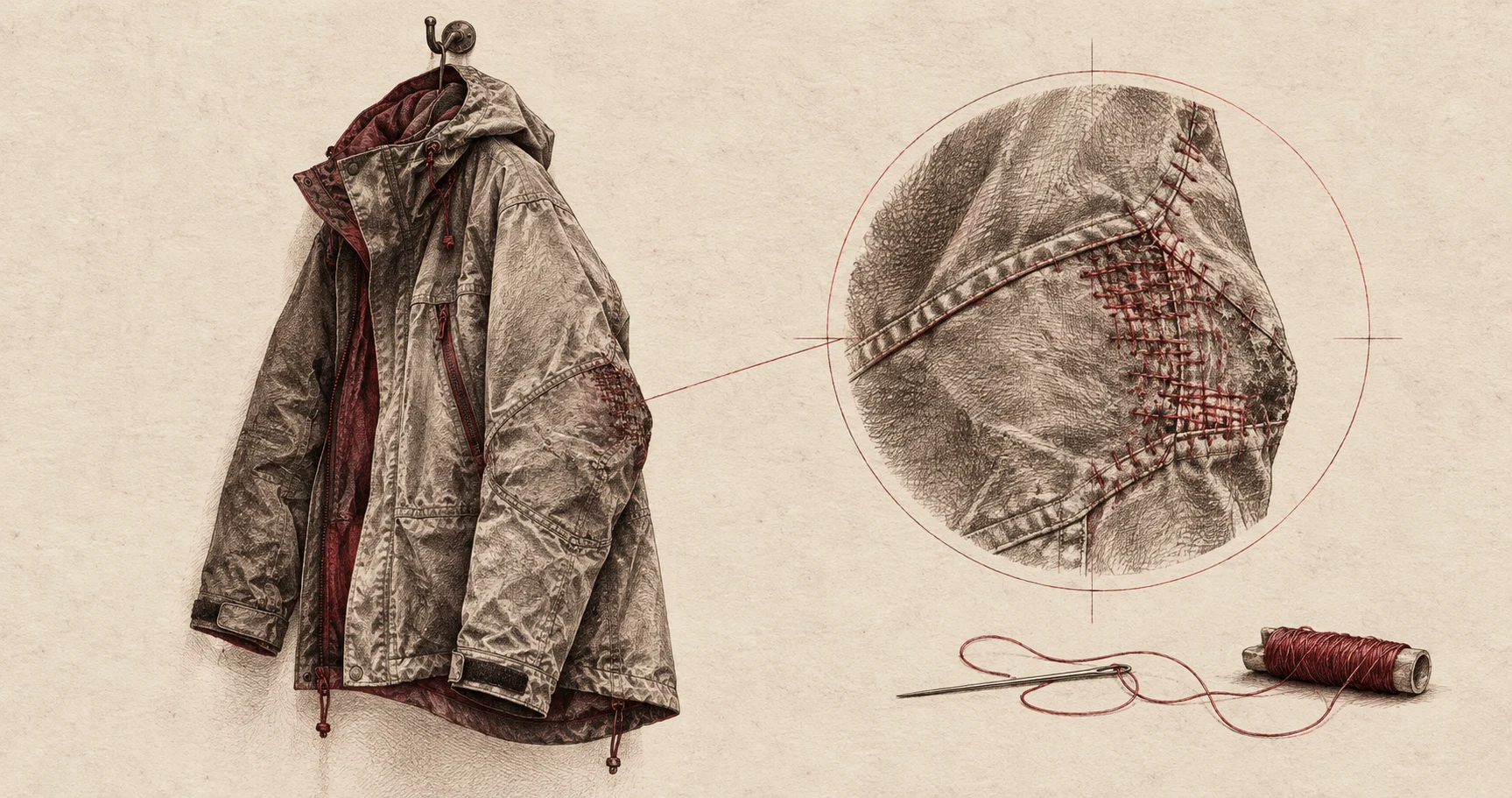
The jacket in the advertisement was something Patagonia sold.
The headline told people not to buy it.
On Black Friday in 2011, Patagonia ran its “Don’t Buy This Jacket” advertisement in The New York Times. Its explanation addressed the environmental cost of making products and encouraged reducing, repairing, reusing, and recycling. It also acknowledged the difficulty of asking for less consumption while running a growing business.
The line is easy to remember. The responsibilities around it are harder to borrow.
When a leadership team admires a campaign, it is worth pausing on that difference before sending the reference to a creative partner.
Identify what you actually admire
Is it the surprise? The confidence? The audience’s recognition of something the company has long stood for? The way the message gives people a useful choice?
Those are different qualities. “We want something like this” can lead a team toward the visible device without establishing the business judgment beneath it.
Describe the quality you want to achieve in your own terms. Then ask what your company does that could earn it.
Read the claim as a customer would
A campaign makes a promise even when it never uses the word.
If you claim unusual transparency, people may examine your pricing and terms. If you celebrate personal service, they may expect the reply to their inquiry to feel considered. If you advocate restraint, they may notice how often you push them to buy.
The examination will cross departments. A marketing team cannot make a company-wide claim credible on its own.
Bring the relevant leaders into the brief. Which practices support the message? Which conditions would contradict it? What needs changing before the claim goes public?
Find the evidence close to the work
You may not need a sweeping moral position to create something distinctive.
Perhaps your firm takes responsibility for a difficult handover other companies avoid. Perhaps it has a precise way of protecting continuity through a complicated rollout. Perhaps it tells clients when an expensive intervention is unnecessary.
Those behaviors can become compelling material if they are real, repeatable, and relevant to the audience. Ask for examples. Look at the decisions, the process, and the people who make them true.
A small well-supported claim can carry more character than a grand claim held together by copy.
Prepare for the attention you are asking for
Before launch, walk through what someone will find after responding. The destination, the reply, the sale, and the delivery should have a credible relationship to the campaign.
Establish how your team will answer skeptical questions. Acknowledging a limitation can be more trustworthy than letting the campaign imply a perfection the business cannot sustain.
Give the creative team something solid to be bold about.
The headline can pull hard when the seam is properly sewn.
Sources and context
Historical details are grounded in the sources below. Business interpretations are RUINE’s editorial analysis. The featured image is an original conceptual illustration, not a historical photograph or measured drawing.
Continue reading at The Desk, or begin with What is a brand brokerage?