A brand you can walk into.
You meet a hotel long before you reach the room. In the photograph that makes you stop scrolling. The reservation confirmation. The entrance you almost miss. The way someone receives you when you arrive late.
Then come the smaller encounters. The weight of the key sleeve. The light beside the bed. The menu that understands why you are still awake. Together, those decisions teach you where you are—and whether you belong there.
Odd Hours explores brand through that accumulation of experience. This was our hotel concept submission, developed across identity, print, an art installation, and a restaurant concept. The material in this file presents proposed directions and concept visualizations.
The premise: a different relationship to time.
“Sleep in. The city can wait.” became a starting point for a hotel with its own relationship to time: lingering dinners, late arrivals, slow mornings, and permission to move at a different pace.
That premise gives the creative decisions something to answer to. The question becomes how the place should receive someone, what it should invite them to do, and how its character carries from one encounter to the next.
The identity: a point of view with physical weight.
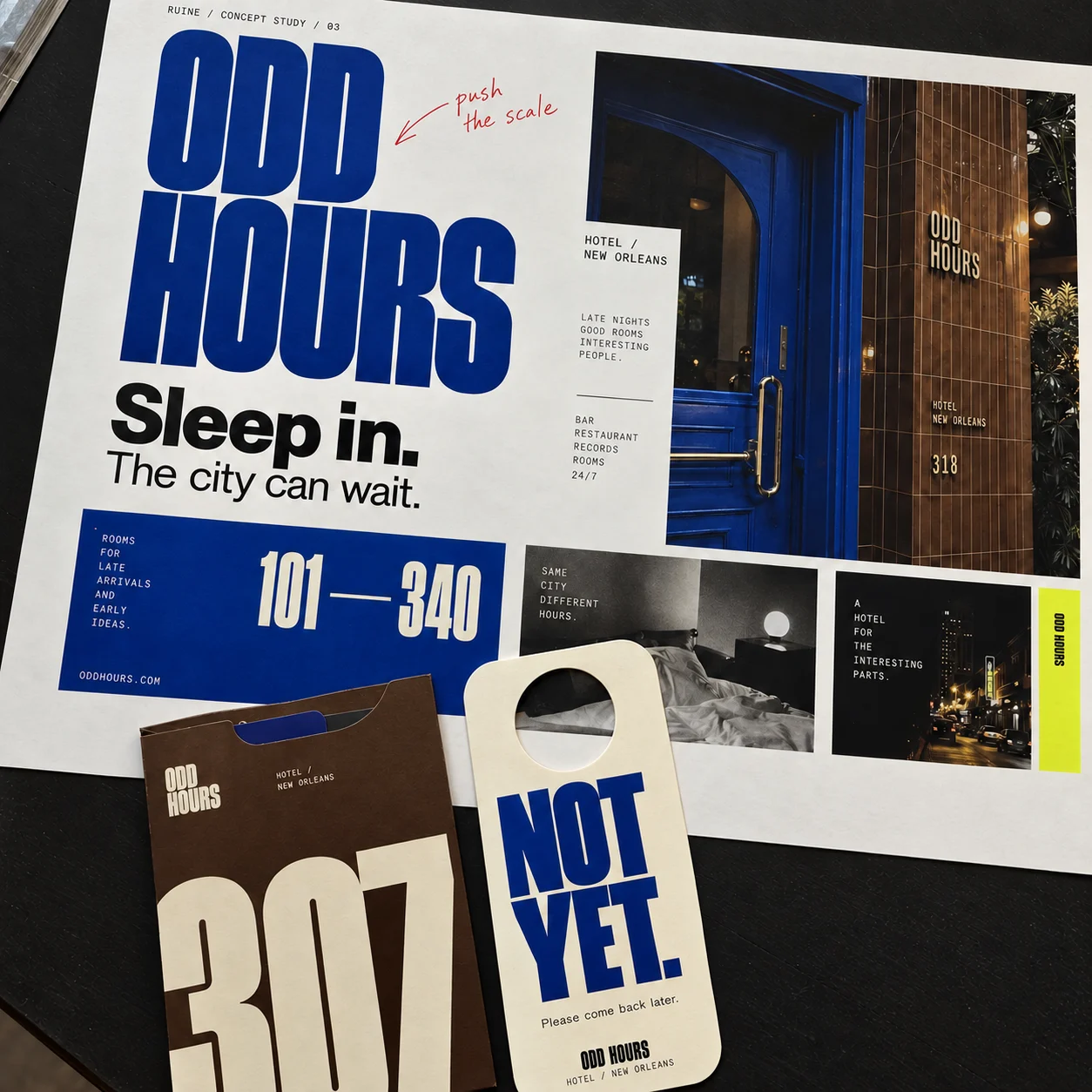
The tightly stacked cobalt identity gives Odd Hours a sharp public presence. Tobacco tile and cream bring warmth and weight. A small chartreuse accent introduces a change in temperature. The palette is considered across surfaces and objects, so that the printed mark and the proposed room belong to the same world.
The print study puts the voice into someone’s hands: a room key sleeve, room number 307, and a door hanger reading “NOT YET.” These are small opportunities for the hotel’s attitude to become useful.
The installation: the idea enters the room.
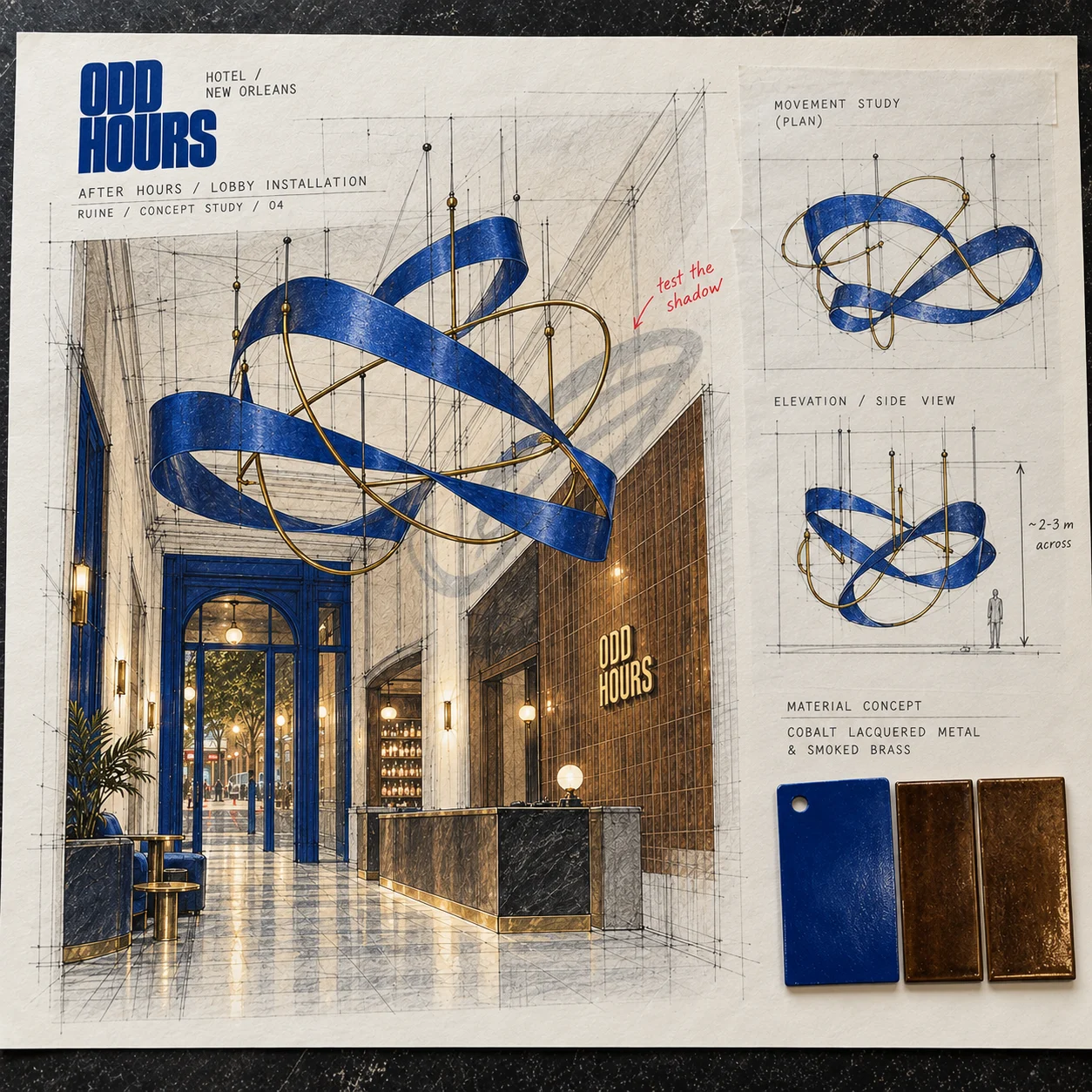
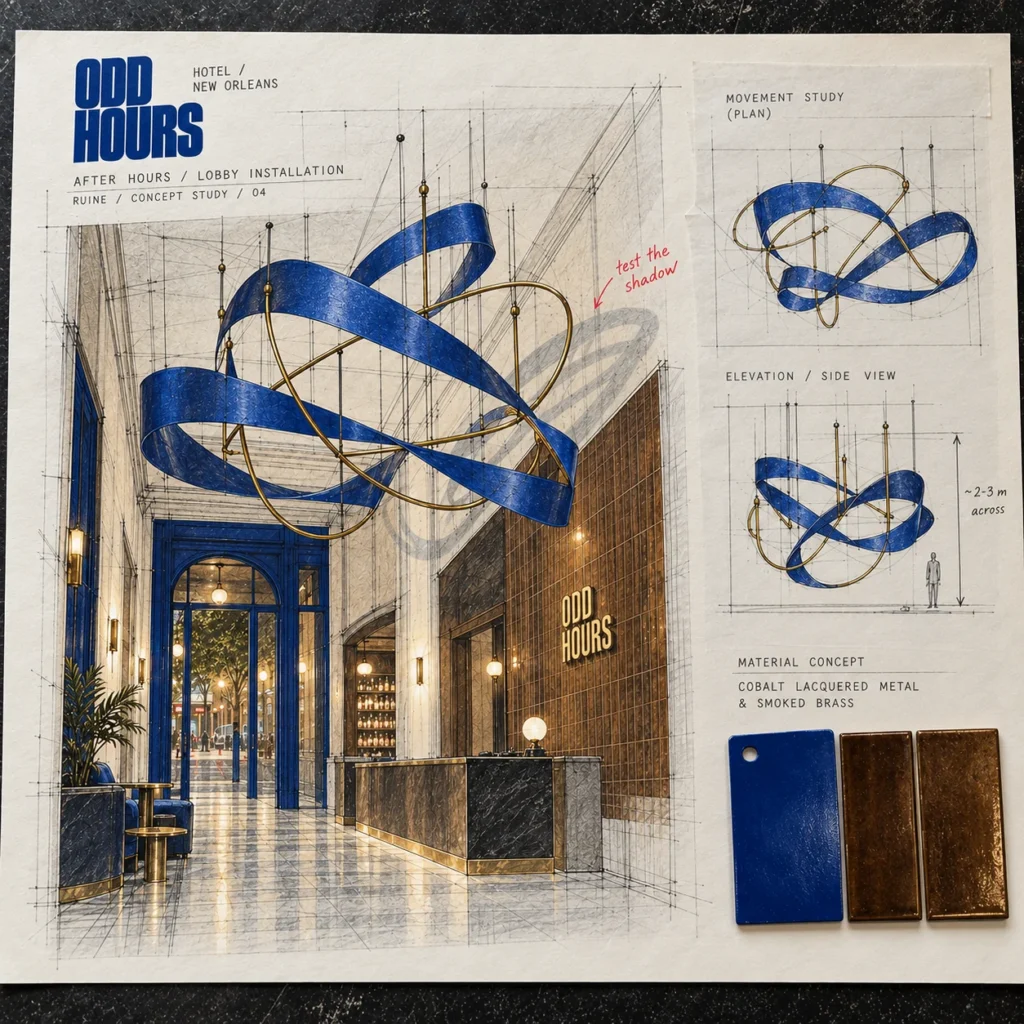
The proposed cobalt installation extends the identity into space. The planning sheet brings together form studies, placement, material references, and review notes. It considers what a guest might encounter at a distance, then notice more closely.
At concept stage, questions of scale, fabrication, circulation, and the surrounding architecture remain part of the work to resolve. The drawing records a direction to investigate.
The restaurant: the hotel develops a social life.
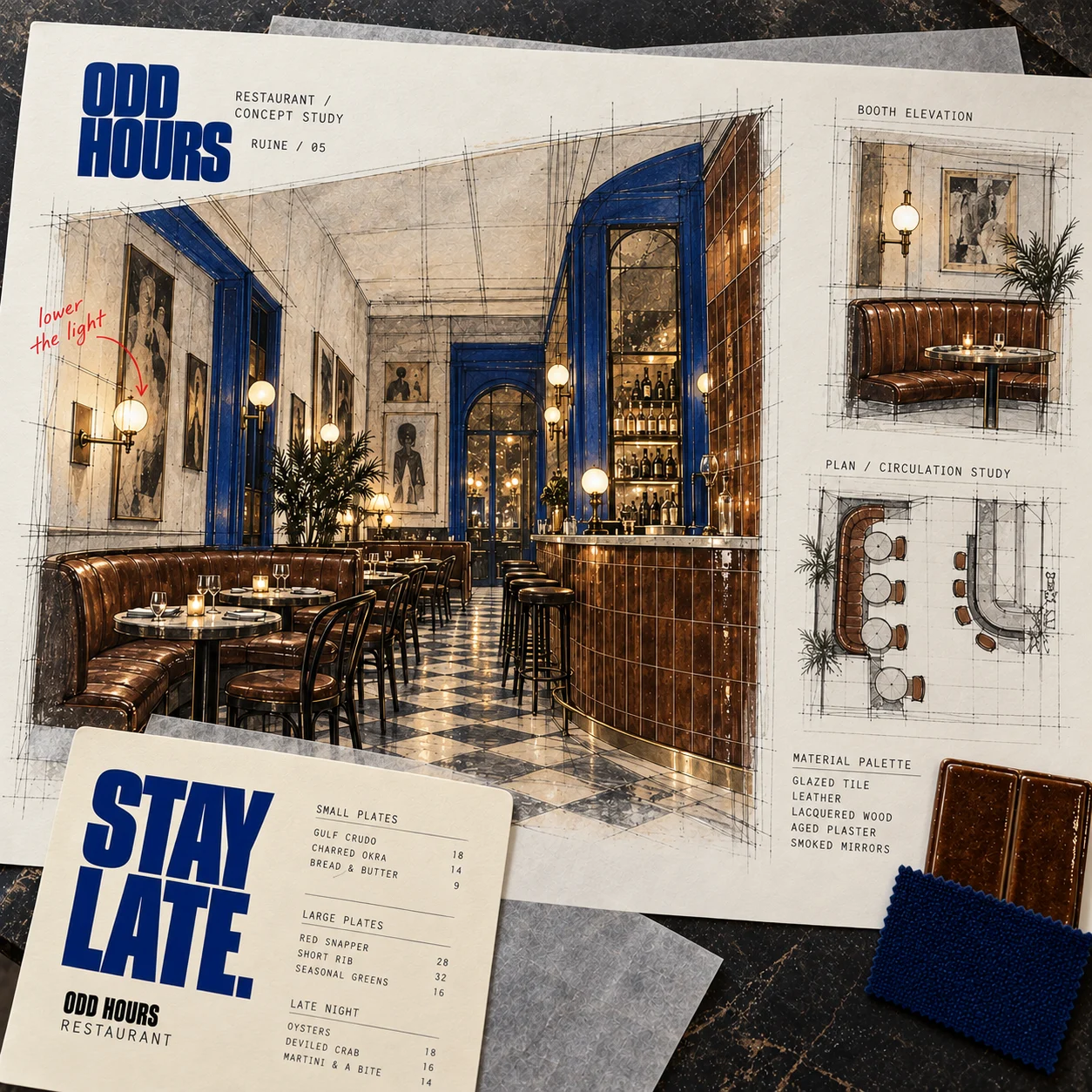
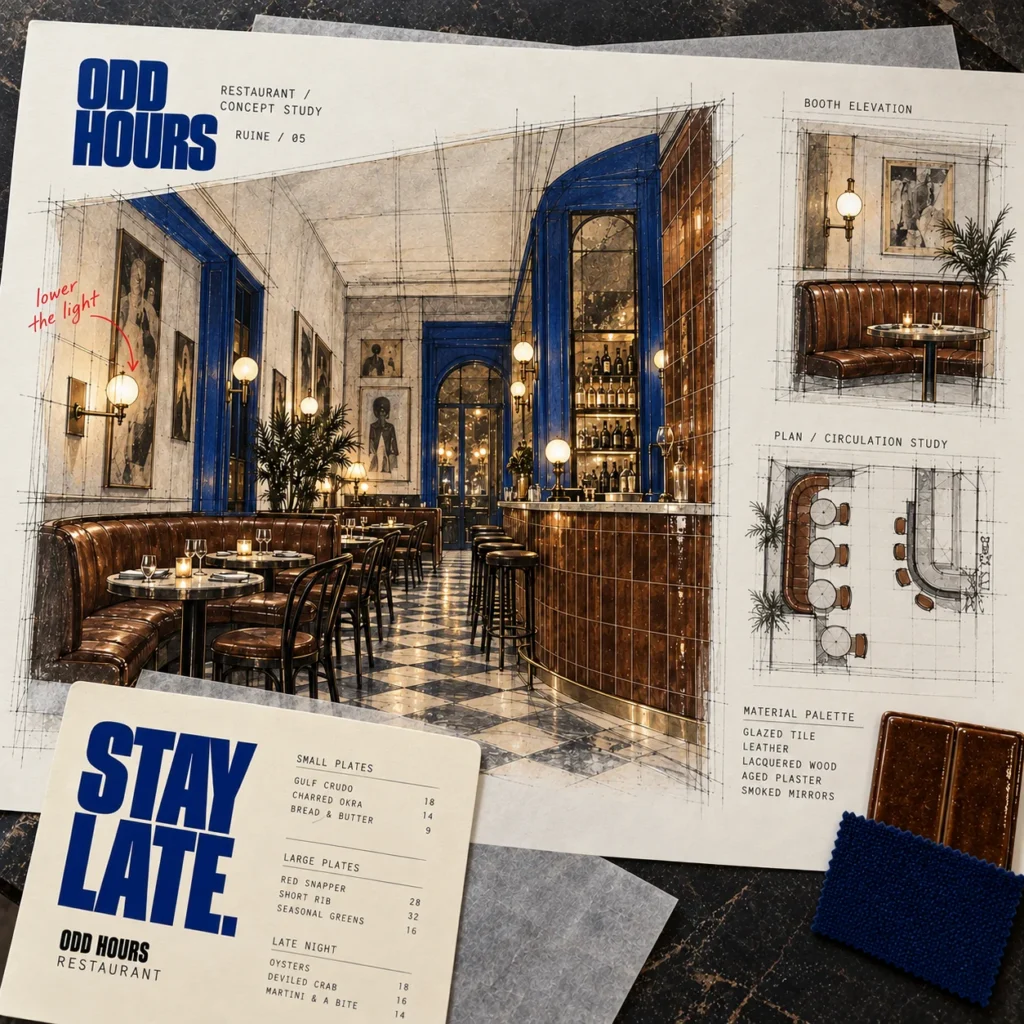
The restaurant concept carries the same point of view into a different rhythm. Interior studies, a “Stay Late” menu, and material selections explore a place people might choose to remain after the rest of the day has ended.
Its job is to contribute to the character of Odd Hours while offering a reason to enter in its own right. The relationship between the hotel and restaurant is considered through atmosphere, language, and the moments each could host.
What the promise asks of the business.
If a hotel promises freedom from the clock, that promise eventually reaches breakfast hours, checkout, staffing, and service. Those operating decisions would have to support the invitation made by the creative work.
A hotel makes this relationship unusually tangible. Brand takes shape in what a company makes, how it behaves, and what people encounter along the way. Creative direction gives those decisions a shared point of view.