
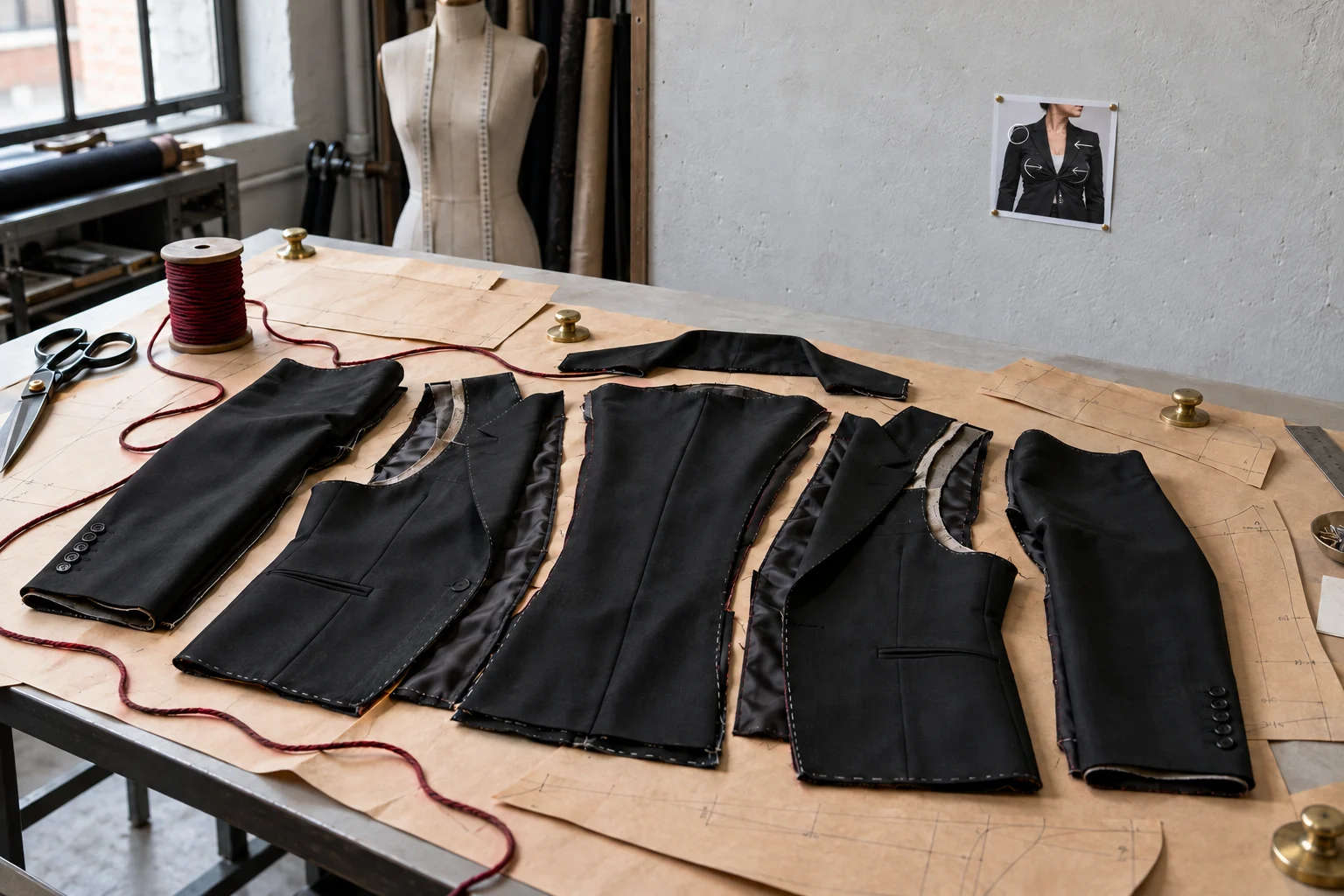
You still like the jacket.
Good fabric. Beautiful shoulders. You bought it at a time when you knew exactly what you wanted to look like.
The button closes. Then you reach for something and feel the pull. So you leave it open. Keep your arms a little closer. Adjust before the photograph.
The jacket has held its shape. You have changed yours.
A company can have the same experience. Its work has become more substantial. Its clients have changed. There are departments now, perhaps several locations, and leaders making decisions the founder once made alone.
Then a prospective client asks for the website, and someone sends a small explanation with the link.
“We do quite a bit more than what’s on there.”
That sentence deserves your attention.
Your team keeps explaining what the brand should make clear
Some explanation belongs in a complex sale. A buyer commissioning consequential work should ask questions.
Listen for the explanation that happens before the useful conversation can begin. Sales must correct the perceived scope. Leadership must explain how an acquired business belongs. Account directors must distinguish the current offering from something the company stopped doing years ago.
The brand is making people undo an impression before they can build understanding.
Ask three people who regularly introduce the company which sentence they keep adding. You may find the same correction wearing three different voices.
The inquiries fit the company you used to be
Compare recent inquiries with the work your strongest clients actually buy.
Are prospective customers requesting an isolated deliverable while existing clients trust you with a broader responsibility? Do they assume a geographic limit you have already moved beyond? Does a new division keep having to borrow credibility from a personal introduction?
Price can be part of this, but “we need to look more expensive” is a poor diagnosis. Establish which capability, outcome, or level of responsibility people are failing to see.
The company might need a clearer account of its work before it needs a different wardrobe.
Your strongest evidence is missing from the introduction
Look at the projects on the homepage. Then look at the engagements your executive team discusses when explaining where the business is going.
Do they describe the same company?
Sometimes the strongest evidence lives in a proposal, a private client conversation, or the head of a department. Meanwhile, the public introduction relies on adjectives: experienced, strategic, bespoke.
Those words ask the buyer to take your word for it. A well-chosen example gives them something to understand.
For confidential work, the answer may be an anonymized account of the problem, the responsibility you held, and the change you helped make. Confidentiality requires judgment. It need not leave the company speaking entirely in adjectives.
The company has several versions of itself
Ask sales, operations, and leadership to describe the promise they believe the company makes.
Their answers need room for their disciplines. They should still belong to the same business.
When one team sells flexibility, another plans around standardization, and the website promises a kind of intimacy delivery cannot sustain, each department may be doing sensible work inside a different understanding.
The founder may recognize the intended shape immediately. Making that shape usable across the organization takes more than asking everyone to use the same slide deck.
What should change?
A capable tailor watches how the garment moves before cutting it.
Begin with three questions: what has changed inside the business, what has changed in the buyer’s understanding, and where does the difference create difficulty?
The answer could be positioning, an offer structure, the evidence you show, or the experience after an inquiry. It could require broader work. Preserve the reputation, relationships, and details that still fit.
The point is to give the company room to move.
You should be able to reach for what comes next without adjusting your whole posture.
Continue reading at The Desk, or begin with What is a brand brokerage?