
For three hours, the thing to buy was unavailable.
In February 2008, Howard Schultz announced that nearly 7,100 company-operated Starbucks stores in the United States would close at 5:30 p.m. on February 26 for hands-on espresso training. Stores with evening hours would reopen at 8:30.
His announcement connected the training to espresso standards and the experience customers received. The company was making time to work on the thing its promise depended on.
That event alone does not explain a corporate turnaround. It does give a leadership team a useful question before commissioning a rebrand.
What would become more credible if we changed what happens behind the counter?
When repositioning is the work
Positioning concerns the place your company should hold in the customer’s decision: whom it serves, what responsibility it takes, what makes it a useful choice, and what supports that claim.
You may have an excellent business whose public account has not caught up. A specialist service has become a broader engagement. A new division has changed the scope. Your strongest clients now value something different from the capability that originally made you known.
Begin by establishing the current commercial reality. What do the right clients buy? Why do they stay? Which alternatives do they consider? Which opportunities should the company decline?
A new visual system can express that decision once it has been made.
When a rebrand is the work
A rebrand changes how the business is identified and expressed. Depending on the condition, that may include naming, identity, language, digital presentation, and physical environments.
It is useful when the current expression creates a misleading impression, cannot accommodate the company’s structure, or no longer carries the qualities people should recognize.
Before replacing familiar details, find out which ones have earned their place. Existing recognition, a credible name, and the way customers talk about you are assets to examine carefully.
Make the new expression specific enough to help a buyer understand the company and flexible enough for your teams to use it well.
When the company needs a rebuild
Sometimes the public story is reasonably clear. The business cannot consistently deliver it.
The offer depends on exceptions. Departments make incompatible promises. A new location experiences the brand differently from the original one. Sales fills capacity that operations cannot support without repeated rescue.
That condition calls for work on the arrangement: offers, responsibilities, systems, service, or the customer journey. Identity may be part of the intervention, but it cannot carry the entire repair.
In an established founder-driven company, this work needs the people who understand the actual constraints. A marketing brief should not quietly become an operating mandate without their involvement.
Decide the order before the launch date
The three routes can overlap. Repositioning might reveal an offer that must be rebuilt. A rebuild might make a new identity appropriate. A company may need a clear interim explanation while larger work is underway.
Ask leadership to define the gap in a sentence grounded in evidence. Then identify the earliest change that would make the next investment more reliable.
If the promise is unclear, clarify it. If the experience contradicts it, repair the experience. If the expression describes another company, change the expression.
You can hang the new sign when you know what people will find beneath it.
Sources and context
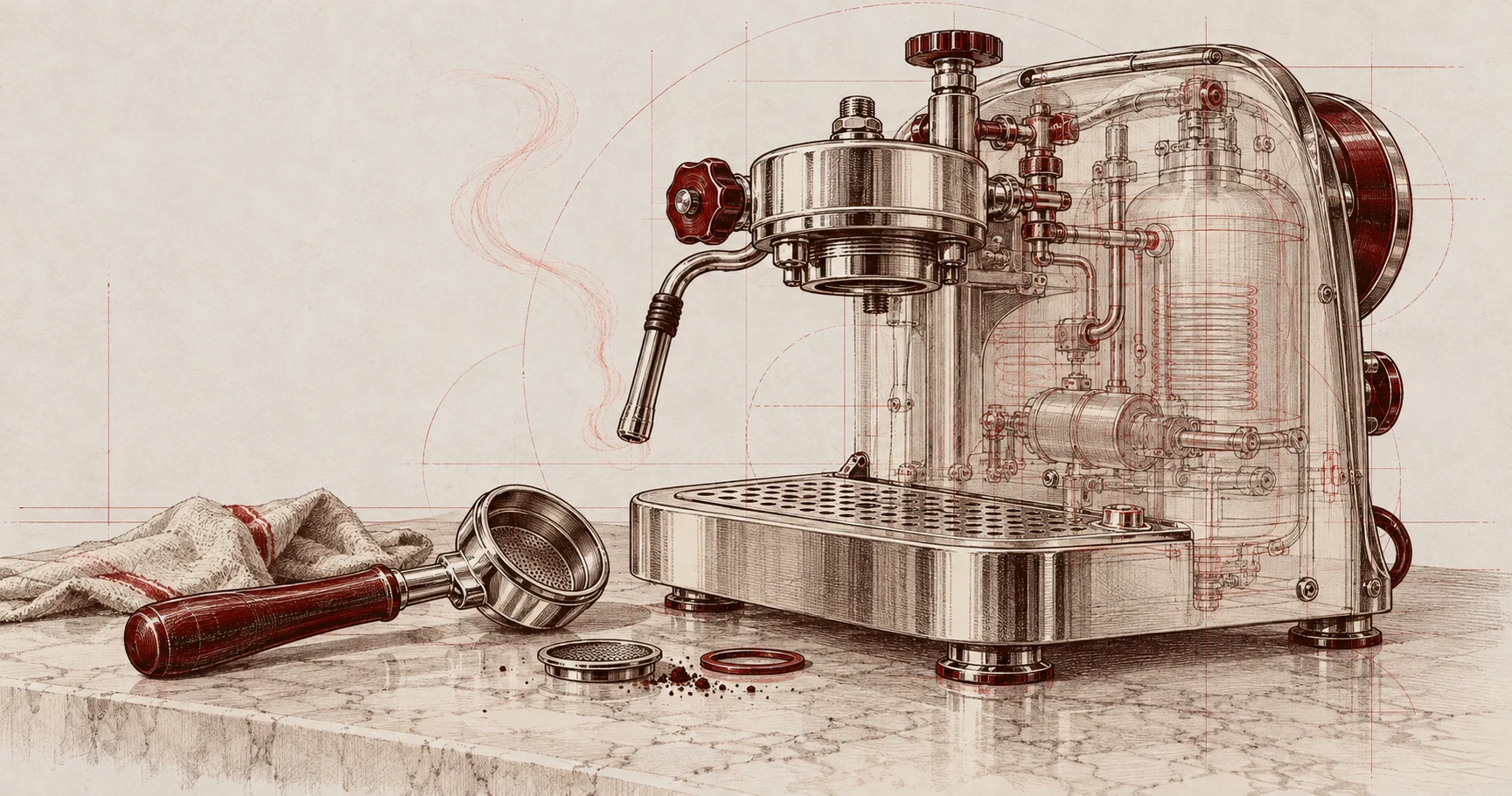
Historical details are grounded in the sources below. Business interpretations are RUINE’s editorial analysis. The featured image is an original conceptual illustration, not a historical photograph or measured drawing.
Continue reading at The Desk, or begin with What is a brand brokerage?