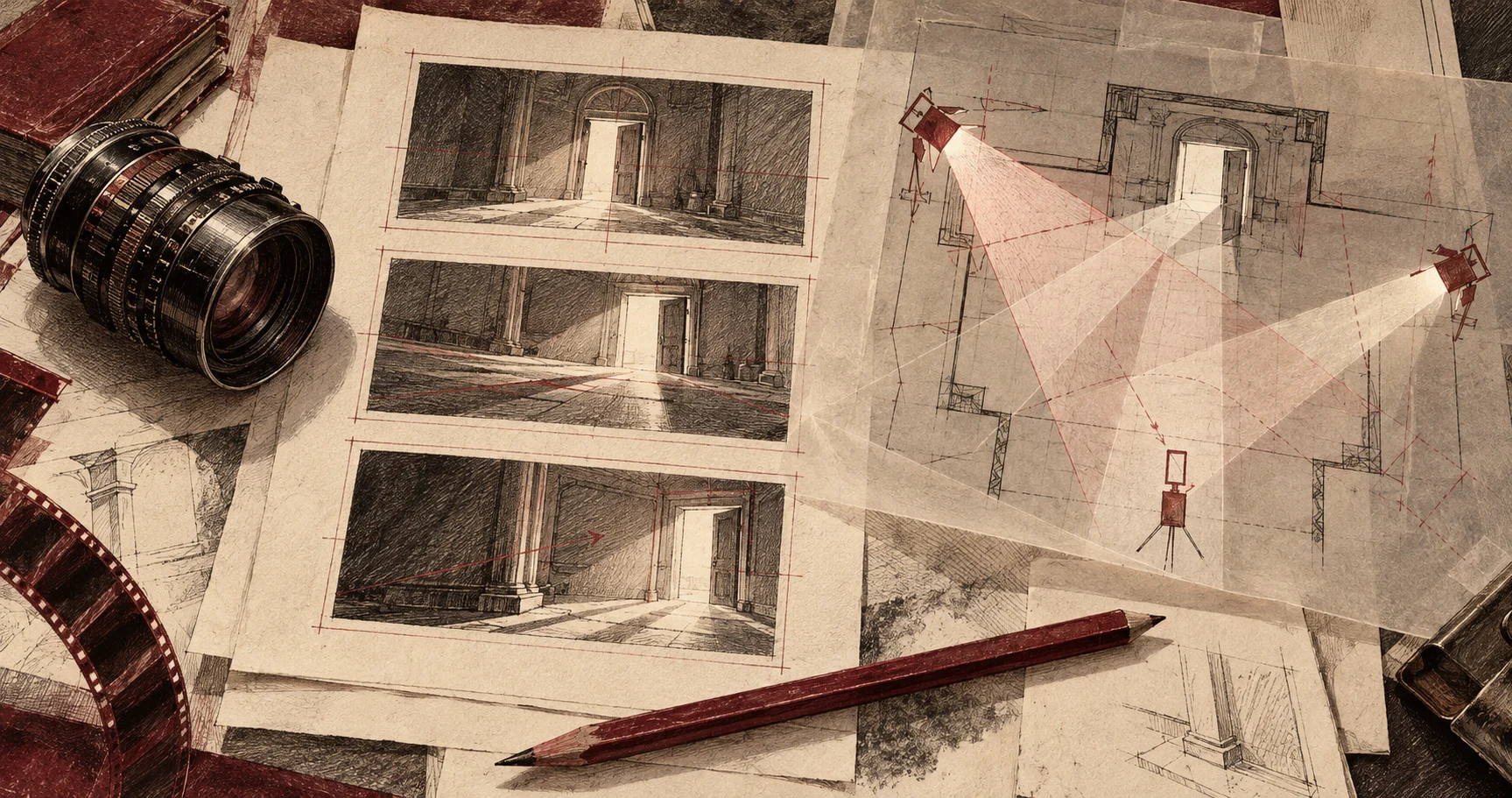
A scene can look effortless.
Someone enters a room. The light changes as they cross it. A small sound tells you something before anyone speaks.
Behind that moment are several kinds of judgment. The camera needs one thing from the space. The lighting needs another. The performance needs room to happen. The editor will eventually need what everyone remembered to capture.
Hiring excellent people helps. Someone still has to hold the scene they are making together.
Brand work has a similar condition. The customer experiences one company, however many specialists helped build the introduction.
Cast around the work
Begin with the problem and the required outcome. Then establish the disciplines and level of experience needed to deliver it.
A complex offer may need strategy and writing before identity design. A digital experience may need service design alongside development. A rollout across several locations may require environmental expertise and an internal adoption plan.
Your company may already have some of these capabilities. Account for them before assembling the outside team. An internal marketing leader should be a participant in the arrangement, with clear authority and responsibilities.
The strongest portfolio in the room is not automatically the missing role.
Meet the people who will do the work
Ask who will be involved, at what stages, and with what level of availability.
Discuss a relevant project in detail. Which decisions did that person make? What constraints did they face? How did their work affect another discipline? What changed after the first plan?
Listen for an ability to explain choices and understand consequences. A specialist who knows where their work connects to others can help you avoid expensive surprises later.
References are most useful when they illuminate the actual working relationship: responsiveness, judgment under pressure, and how disagreements were handled.
Give collaboration something concrete to act on
“We are all collaborative” does not establish who decides when the writer and designer disagree about a page.
Define who holds direction, who approves the strategic decisions, and which specialist owns each part of delivery. Describe the handovers: what information is required, what is provisional, and what has already been agreed.
Then examine one shared problem. This can be a paid diagnostic stage or a discussion grounded in existing work; it need not be an unpaid pitch.
How does the proposed team respond? Do people ask useful questions? Can they explain a tradeoff? Can they change their view without abandoning their expertise?
Assess the arrangement as well as the talent
Schedules, capacity, access to decision makers, and a realistic sequence matter. An excellent specialist cannot rescue every engagement from a brief that keeps changing after production has begun.
Establish where change will be expected and how its consequences will be evaluated. Keep the relevant internal leaders close enough to resolve decisions without turning every detail into a committee.
At RUINE, the diagnosis shapes the team, and Whit directs the connections through delivery. Other arrangements can also work well when that responsibility is explicit.
The point is to make room for people to do their best work in relation to one another.
You are choosing the people who can make the scene, and the direction that will let you recognize it.
Continue reading at The Desk, or begin with What is a brand brokerage?
Questions people ask
Should we hire one firm or several specialists?
Either can work. Evaluate the capabilities required, the internal team’s capacity, and who will hold direction across the work. Multiple specialists need explicit coordination and decision ownership.
How can we assess collaboration before a major engagement?
Discuss actual handovers and disagreements from relevant work, meet the proposed delivery team, and consider a bounded paid diagnostic stage that tests its response to a shared problem.